

Environmental
Territory, water management and biodiversity in MRN's operating area, in Porto Trombetas.
Environmental strategy
MRN’s environmental management approach spans the entire mining lifecycle, from planning and environmental licensing to mining, beneficiation, tailings management, and the ecological restoration of mined areas. The strategy integrates biodiversity conservation, water management, waste and tailings management, climate change, energy, and environmental compliance. For biodiversity, environmental management begins before mining, with forest inventories and flora and fauna rescue activities, and continues through the ecological restoration of mined areas. In 2025, 351 hectares were restored, and the survival rate of rescued species reached 99.7%. In water management, consumption totaled 15 million m³ in 2025, below the annual target of 16 million m³. Water reuse and recirculation are key components of MRN’s strategy to reduce freshwater withdrawals. MRN also completed 100% implementation of the Global Industry Standard on Tailings Management (GISTM) across its operations in 2025, strengthening its approach to safe and responsible tailings management. The strategy also addresses waste reduction and decarbonization. MRN has committed to reducing Scope 1 and 2 greenhouse gas emissions by 25% by 2027, compared with 2024 levels. The Transmission Line Project is a key part of this transition and has the potential to reduce emissions associated with MRN’s current power generation by approximately 90%, contributing to lower carbon operations.
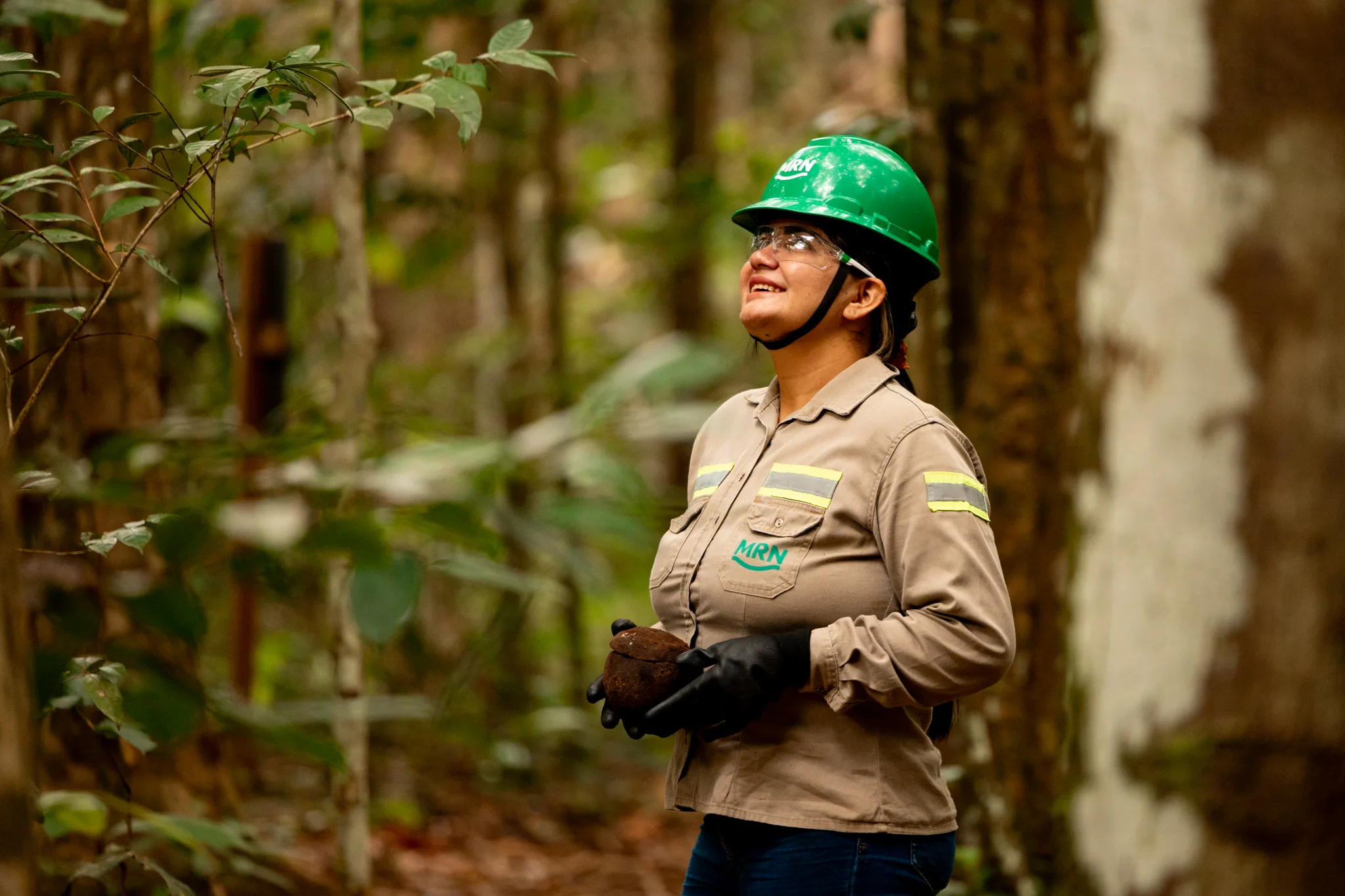
Environmental management
integrated into our operations
MRN’s environmental strategy spans the entire mining lifecycle, integrating biodiversity conservation, water management, decarbonization, tailings safety, waste management, and environmental compliance. Our approach combines impact prevention, continuous monitoring, and ongoing improvement in environmental performance. Biodiversity and restoration Conserve biodiversity and progressively restore mined areas. Water and effluent management Improve water efficiency, reuse and recirculation, and water quality monitoring. Climate change and energy Reduce greenhouse gas emissions and advance the transition toward a lower carbon energy mix. Tailings and structural safety Manage tailings through continuous monitoring, risk prevention, and alignment with the Global Industry Standard on Tailings Management (GISTM). Waste and resource efficiency Prioritize waste reduction, reuse, recycling, and appropriate disposal. Environmental licensing and compliance Integrate legal requirements, license conditions, and environmental controls into our operations.