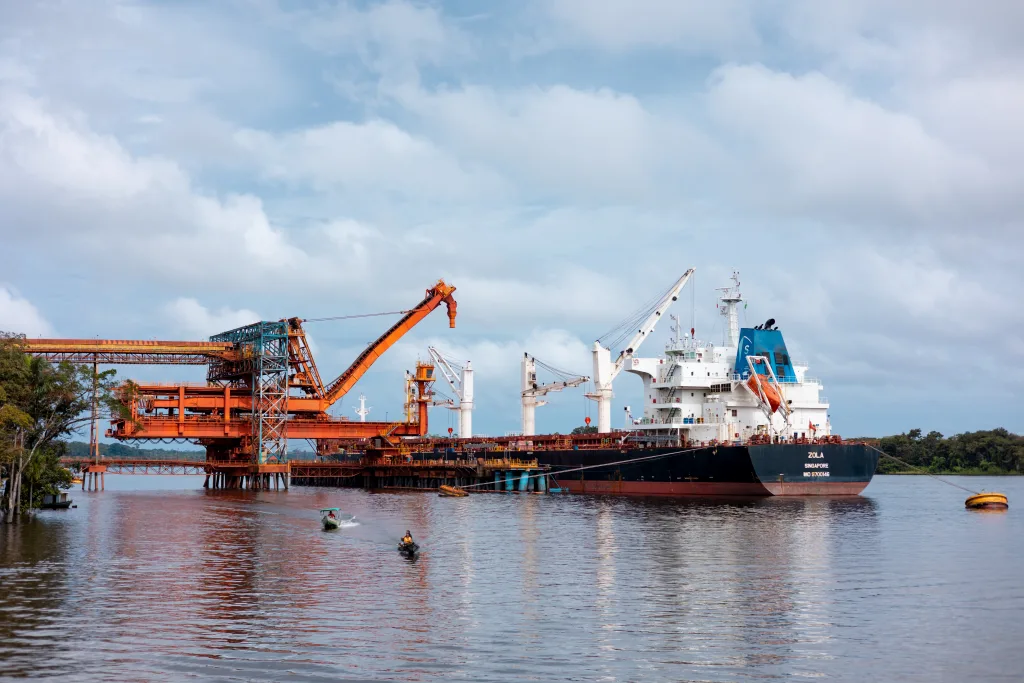
The New Mines Project supports the continuity of bauxite production in western Pará while creating new opportunities for people, suppliers, and local communities.
The New Mines Project (PNM) is central to the continuity of MRN’s operations. Rather than expanding production capacity, the project is designed to maintain it. Five new mining plateaus, Rebolado, Escalante, Jamari, Barone, and Cruz Alta Leste, will gradually replace the depleting deposits in the East Zone, supporting the continuity of bauxite production for at least another 15 years.
The project includes new mining areas in Oriximiná, Terra Santa, and Faro, with planned average production of 12.5 million metric tons of bauxite per year. In April 2026, the PNM received its Installation License (LI) from Ibama and entered the implementation phase.
With an estimated R$5 billion in investment over the next five years, the project is expected to create 2,300 jobs during implementation, while expanding opportunities for workforce training, local procurement, and economic development in western Pará.
Developing new mining plateaus is essential to ensure the continuity of MRN’s operations as the deposits in the East Zone gradually approach depletion. The New Mines Project will enable MRN to maintain production capacity, employment, and value creation in western Pará for at least another 15 years.
The deposits currently being mined are approaching the end of their productive life. Developing new mining areas is necessary to maintain a continuous supply of bauxite.
Continuing operations will help sustain approximately 6,000 direct and indirect jobs and support income generation across the region.
Continuing operations will also sustain tax revenues and social investments that contribute to public policies and socioeconomic development across the region.
The project provides a phased, licensed approach to maintaining bauxite production over the long term, with planning that incorporates environmental compliance, stakeholder engagement, and social and environmental commitments.
Rebolado, Escalante, Jamari, Barone and Cruz Alta Leste make up the five new mining plateaus in the West Zone, which will gradually replace the depleting deposits in the East Zone.
One of the five new mining plateaus that will gradually replace the depleting deposits in the East Zone.
A new mining area within the New Mines Project, developed as part of the project’s environmental licensing process.
One of the new mining areas supporting the continuity of MRN’s operations, located within the Saracá Taquera National Forest.
A new mining area designed to support the continuity of MRN’s bauxite production capacity.
A new mining plateau included in MRN’s long term mine sequencing and land rehabilitation planning.
The five plateaus are located within the Saracá Taquera National Forest in western Pará and will be integrated with MRN’s existing beneficiation and logistics infrastructure.
From planning to area recovery, each milestone is executed with environmental control and transparency. The dates are planning estimates.
Geological surveys, feasibility studies and design of the mining sequence for the five new plateaus.
Previous License granted by IBAMA, after licensing with environmental, social studies and Quilombola component.
Specific adjustments to existing infrastructure and opening of new, authorized and monitored access roads.
Phased incorporation of new plateaus, replacing exhausted deposits in the East Zone without interrupting operations.
Progressive rehabilitation of mined areas, with reforestation and long-term monitoring.
Investment approved by shareholders and Installation License (LI) issued, with project implementation started.
Environmental licensing is conducted by Ibama, Brazil’s federal environmental authority. The Preliminary License (LP) was issued in 2024, followed by the Installation License (LI) in April 2026, authorizing the project to enter the implementation phase. The licensing process included environmental and social studies, a Quilombola component study, stakeholder engagement, and consultation with Quilombola communities.
Diagnosis of the physical, biotic and socioeconomic environment with impact assessment and mitigating measures.
Studies and consultation with Quilombola and traditional communities in the surrounding area, ensuring transparency and active listening to the territories.
Certificate of environmental viability of the project, granted by IBAMA in 2024.
Authorization for preparation of accesses and infrastructure, with control and monitoring conditions.
Release for the start of mining, subject to compliance with approved environmental programs.
Execution of recovery plans for degraded areas and permanent environmental monitoring.
Continuity of operation means employment, income, investment and development for Oriximiná and western Pará.
Maintenance and generation of qualified jobs, with training programs for local labor.
Maintenance of investments in the operation and the collection of royalties (CFEM) that return to the municipality and the state.
Full licensing, recovery of areas and programs with the surrounding traditional communities.
It is MRN's project to open new bauxite mining plateaus as the current deposits are exhausted, ensuring the continuity of production with full environmental licensing in the Oriximiná region, in Pará.
The plateaus under mining today are approaching the end of their useful life. Opening new fronts is essential to sustain the operation, preserve jobs and maintain the economic activity that moves the entire region.
There are five new mining plateaus — Rebolado, Escalante, Jamari, Barone and Cruz Alta Leste —, located in the municipalities of Oriximiná, Terra Santa and Faro, within the Saracá-Taquera National Forest. They will gradually replace the depleting deposits in the East Zone.
Yes. The Preliminary License (LP) was granted in 2024 by IBAMA, after licensing that included environmental, social studies and the Quilombola component, with the participation of traditional communities in the surrounding area.
The continuity of the operation supports thousands of jobs, generates investments and revenue (CFEM) and keeps the commerce, services and logistics chain in Oriximiná and western Pará strong.
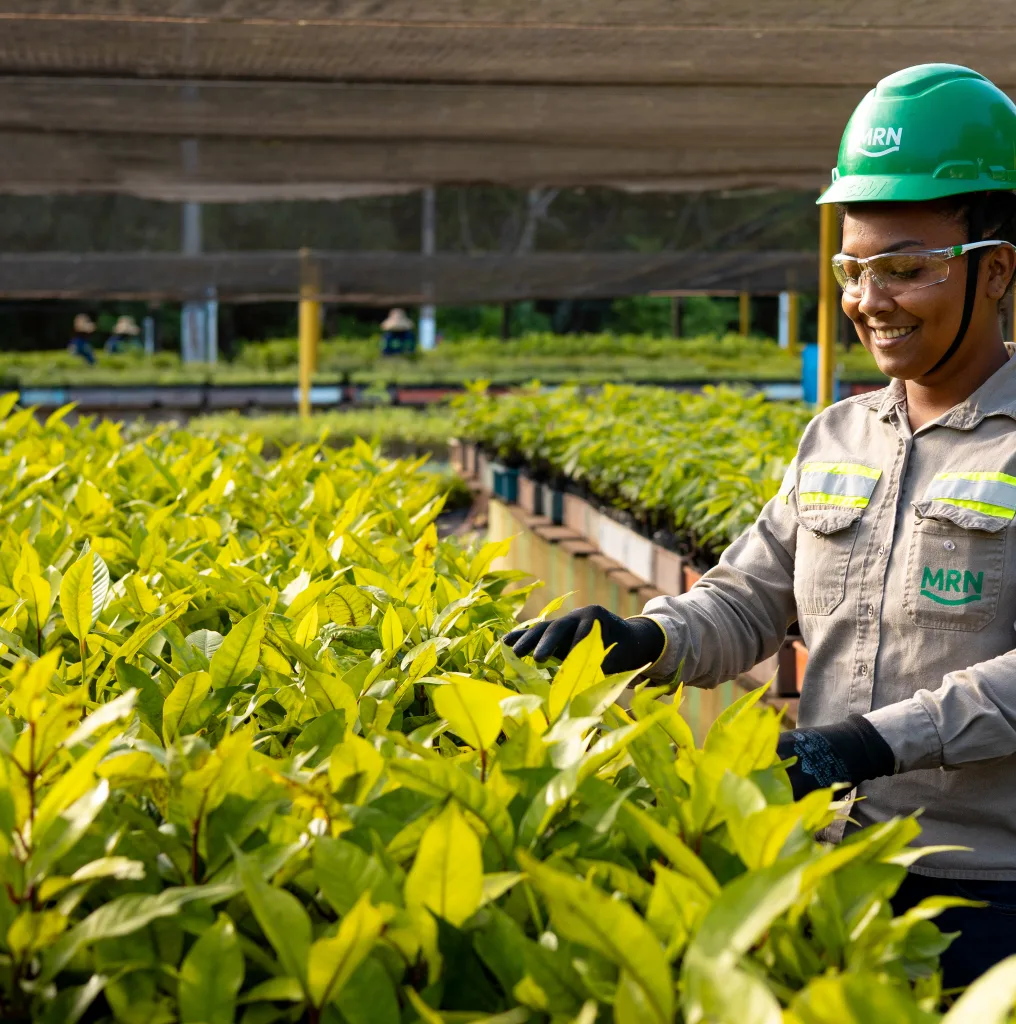
MRN carries out progressive recovery programs for cultivated areas, with reforestation and long-term environmental monitoring, integrated into the project plan.
Images that portray MRN's operations and commitment to the environment in the Amazon.
The New Mines Project reinforces MRN’s commitment to responsible bauxite production and the sustainable development of the Amazon. Learn more on MRN’s official portal.