MRN begins training 1,200 residents to expand job opportunities in western Pará
With free courses and a one-time stipend of R$ 960, the initiative seeks to expand job opportunities and train a local workforce for the region's current and future demands
Mineração Rio do Norte's (MRN) commitment to training a local workforce reached a new chapter this July. For 1,200 residents of Faro, Oriximiná and Terra Santa, this commitment is beginning to translate into new prospects for work and income as the first classes of the Workforce Management Program (PGMO) of the New Mines Project (PNM) get under way. The Program offers free courses in 14 areas and a one-time stipend of R$ 960 to participants.
To make vocational training more accessible, MRN took the registration process to the municipalities and communities covered by the project through mobile actions, expanding the initiative's reach and making it easier for residents of different locations to take part. The opening ceremonies for the classes, held from July 8 to 13, marked the start of the training journey, which may run until June 2027, depending on the length of each course. For MRN's CEO, Guido Germani, investing in education and vocational training is one of the most effective ways to promote lasting development. “The New Mines Project begins with people. By starting classes in the Vocational Training Program, we are taking an important step to prepare men and women in the region for the opportunities that will arise in the coming years. Investing in training means believing in the potential of communities and contributing to development that brings lasting benefits to the whole territory.”
In total, 600 places are offered to residents of Oriximiná, 400 to Terra Santa and 200 to Faro. More than preparing professionals for the future stages of the New Mines Project, the program aims to increase employability and strengthen the local economy.
In the view of MRN's Implementation director, Leonardo Paiva, the success of the PNM goes far beyond developing and executing the project itself; it depends fundamentally on the development legacy that an investment of this magnitude provides. “The most important moment of the Project is when people begin to build this future. Vocational training is the foundation that allows residents of the region to seize the opportunities ahead and grow together with the PNM. That is how we believe a project generates development: by investing in people and leaving knowledge as a legacy for the region where we operate.”
According to MRN's general manager of Human Resources, Magda Damasceno, the initiative was designed to meet both the project's needs and the opportunities that arise in other sectors. “The courses were structured to match the New Mines Project implementation schedule. But the training, especially in civil construction, also meets the demands of the municipalities and other companies in the region. We are investing in people and preparing them for the opportunities that will emerge in the coming years.” A dream that begins with training
For those in the classroom, the opportunity means much more than a certificate. Terra Santa resident Giovanni Seixas, a student in the Construction Helper course, says the training brings a long-held dream closer. “It is a pleasure to take part in this program. We have never had an opportunity like this. What motivated me was the chance to enter the job market and earn this certificate. My dream has always been to work in mining. I never gave up and I will keep pursuing it.”
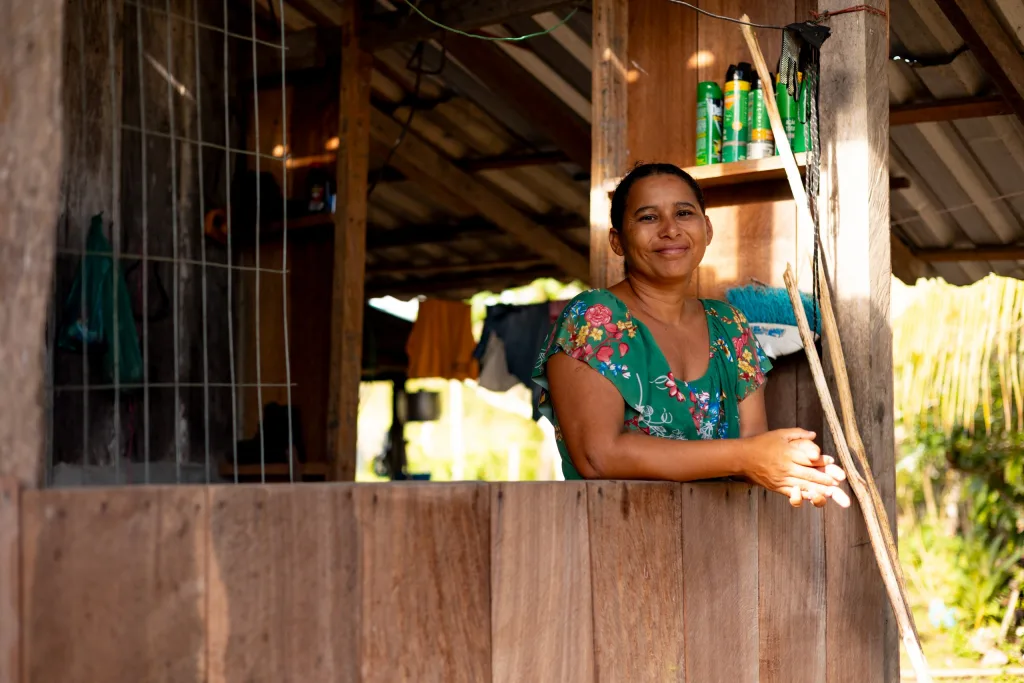
In the riverside community of Aibi, in Faro, Cacilene Marques also sees the training as a path to new life plans. “This knowledge will help me a lot. Who knows, some time from now I might study Engineering at university. It is a dream I am nurturing.” Stories like those of Giovanni and Cacilene reflect one of the program's goals: expanding access to vocational training in municipalities where such opportunities are still limited.
Knowledge that stays
For the general manager of Projects and Works, Raphael Cadinelli, the greatest legacy is the knowledge acquired by the participants. “The New Mines Project has an implementation period of three and a half years, but the training will stay with each student throughout their professional life. This is an asset that remains with the community.” He stresses that training broadens horizons: “Training must be a continuous process. Whether they work in mining, for contractors or in another sector, those who invest in knowledge expand their opportunities to grow.”
Training aligned with the market
The courses are delivered in partnership with the National Service for Industrial Training (SENAI), which is responsible for theoretical and practical activities. According to Peter Razeira, director of SENAI for Santarém, Juruti and the Western region, the methodology was developed to bring students closer to the situations found in the workplace. “SENAI integrates theory and practice. During the training, students develop technical skills always with a focus on health and safety. When they complete the course, they enter the market as qualified professionals.”
The courses are part of the regional development actions of the New Mines Project, an initiative that ensures the continuity of MRN's operations in western Pará for the next 15 years, with annual production of 12.5 million tonnes of bauxite. Now in the implementation phase, the project will enable R$ 5 billion in investments over the next 5 years, creating 2,300 jobs during construction and preserving 7,500 jobs in operations, 85% of them held by people from Pará. The initiative also foresees increased social, environmental and infrastructure investments in the region's communities, in addition to continued payment of taxes, reinforcing vocational training as one of the project's lasting legacies.