From impacted area to living laboratory of the Amazon: how Lake Batata became a scientific benchmark
Initiative led by MRN and UFRJ brings together more than 35 years of scientific evidence on biodiversity, water quality and ecosystem recovery
When it comes to environmental recovery in the Amazon, few cases have accumulated as much data, research and results as Lake Batata, in Oriximiná, western Pará. During International Environment Month, celebrated in June, Mineração Rio do Norte (MRN) highlights one of the longest-running ecological restoration initiatives in the region. Even after recovering its ecological functions, Lake Batata continues to be monitored by researchers from the Federal University of Rio de Janeiro (UFRJ), generating scientific knowledge on biodiversity, water quality and the conservation of Amazonian ecosystems.
More than 800,000 seedlings of igapó (flooded forest) species have been planted by MRN, contributing to the restoration of 120 hectares of vegetation. The area that underwent interventions is home to 171 fish species, tracking the recovery of vegetation and environmental conditions. The work has also resulted in 99 scientific publications. “These results help tell a story that began back in the 1980s. What was an environmental challenge has become a natural laboratory of the Amazon, contributing to the conservation of the region,” says Vladimir Senra, MRN's director of Sustainability and Legal.
Fish tell the story of recovery
Ichthyology specialist and UFRJ professor Natália Lacerda explains that fish serve as indicators of the environmental quality of rivers and lakes. When the environment improves, new species find conditions to establish themselves, the food chain grows stronger and biodiversity becomes richer. “We have observed an increase in the number of species and in fish diversity. This shows that environmental quality has been improving.”
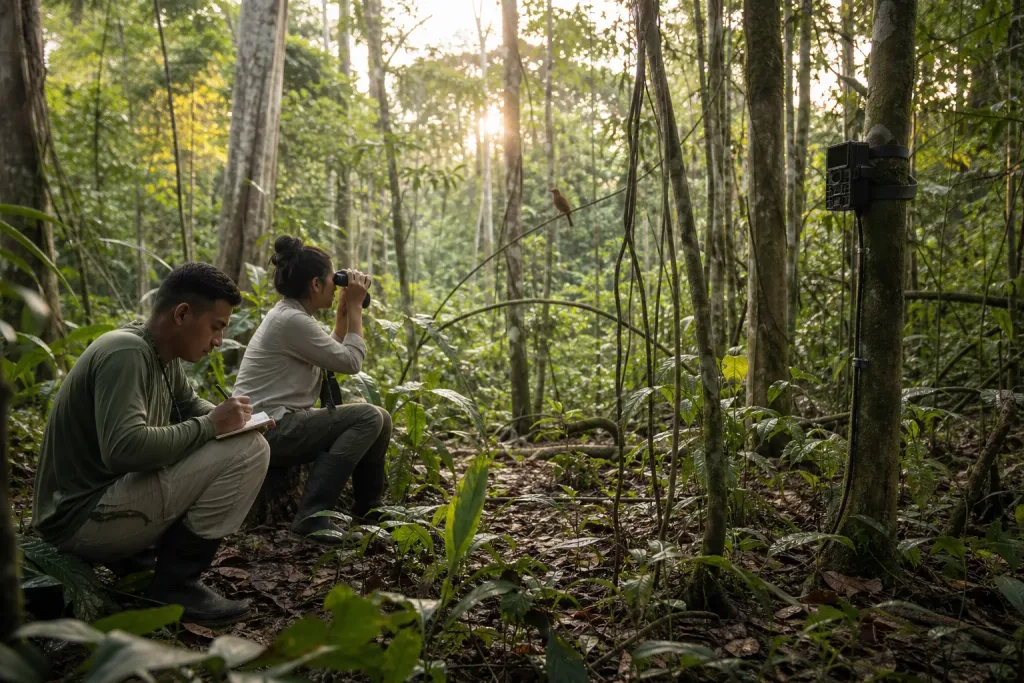
According to Natália, what sets the project apart is the continuity of monitoring. Over more than 35 years, not only fish but also water quality, sediments, vegetation and other components have been analyzed. “It is this combination of information that allows us to reliably understand what is happening to the environment.”
An entire ecosystem in transformation
Although aquatic fauna is one of the most visible indicators, recovery involves a much larger network of organisms. “When people think about the biodiversity of a lake, they usually think of fish, but they are a small part of this ecosystem. Microscopic organisms sustain the entire food chain and keep the environment functioning,” explains Francisco de Assis Esteves, PhD in Limnology, researcher and professor at UFRJ.
The biologist notes that even after recovering its ecological functions, Lake Batata continues to be monitored and to generate scientific knowledge. “New species continue to be recorded, and permanent monitoring allows us to understand how the ecosystem evolves over time,” he explains. Esteves describes water quality as a heritage of the region: “In the Amazon, rivers, lakes and streams provide food and leisure and sustain biodiversity. Preserving water means preserving life.”
Far beyond environmental recovery
For the MRN director, one of the initiative's legacies is the integration of science, environmental management and local knowledge: “The success of Lake Batata shows that collaboration among companies, academia, environmental agencies and communities can generate concrete solutions for the conservation and sustainable development of the Amazon.” This commitment to monitoring goes beyond Lake Batata. MRN monitors the quality of the region's water resources at 301 points in rivers, lakes, streams, springs and groundwater.
In 2025 alone, 95,615 analyses were carried out, with a compliance rate of 98.15%, following the parameters set by the National Environment Council (Conama). The results are reported to environmental control agencies through the Environmental Performance Report (RADA) and shared with the region's communities. Residents follow sample collection in the field and have access to the results, strengthening transparency, dialogue and social participation in the management of natural resources.
Explore Lake Batata's ecological restoration journey on this page.
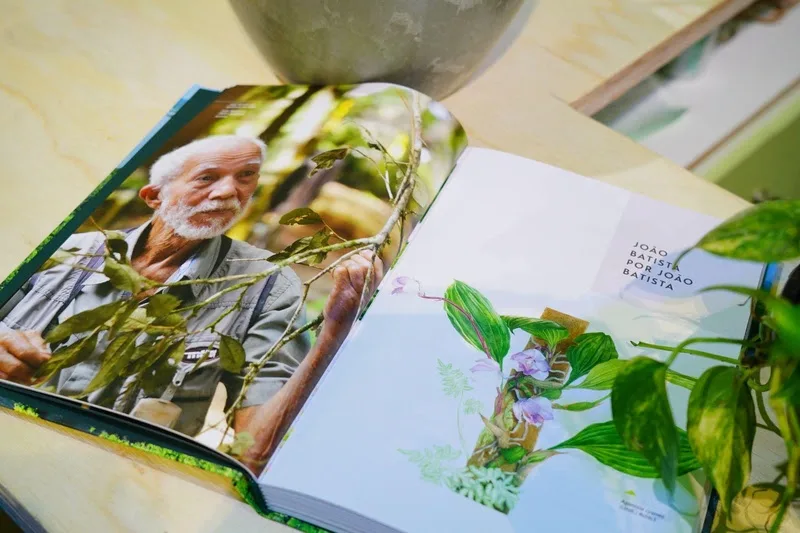
“Onde andei valeu a pena” competes for Brazil's leading award for scientific works, with accounts of expeditions and 25 years of the environmental rescue and reintroduction program